Beyond the Blinking Cursor: Introducing Humancore Programs & Initiatives
Ken Lahti
|
September 8, 2026

Change management is learning at scale. The challenge is getting dozens or thousands of people to actually translate a program or initiative into new skills, habits, and ways of working. That happens one person at a time.
HR, talent management, L&D, organizational development and instructional design professionals know how to design those programs, but they've historically lacked the ability or resources to personalize and sustain them at scale. For decades the field has been promised personalized, prescriptive, just-in-time microlearning. What showed up was a days-long playlist of training videos competing with everyone's real work, like a new exercise routine on the second day of January.
AI should be able to close that gap. Just telling people to go talk to an AI about what they learned in the leadership development workshop won't do it.
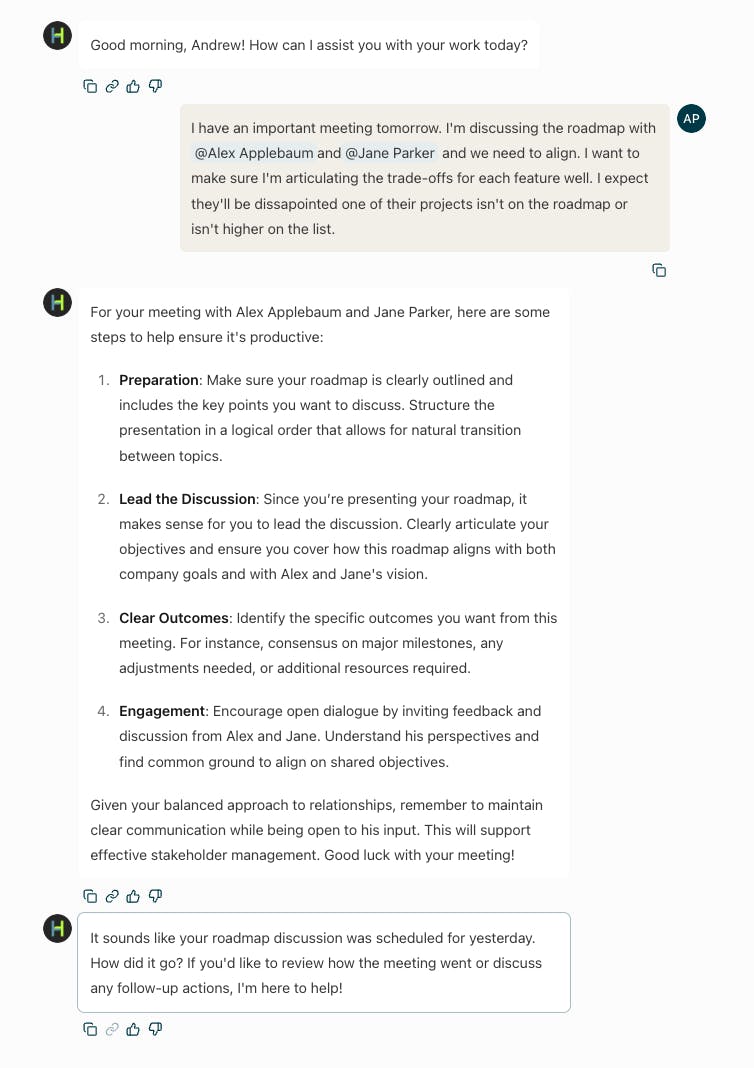
Before an employee gets anything useful out of a blank prompt, they have to supply the context the model is missing, decide what's worth discussing, pick what kind of conversation to have, and judge when they're done. That's a lot to ask of someone who showed up looking for help, and the burden is heaviest on the people who need the help most.
This isn't a design quibble. In a randomized study of nearly a thousand students, researchers at the University of Pennsylvania found that giving learners an unrestricted chatbot during practice improved how they performed on the practice problems but lowered their scores on the test that followed. Those students also believed they'd learned more than they had!
Our own numbers point the same way from the other direction. Even with the early and fairly crude “starter prompts” we built into the Advisor, about one in six conversations begins from a suggested starting point instead of a blank one. People are telling us what they want by what they click.
Deployment patterns say something too. Across our customer base we commonly see adoption three to four times higher when access is tied to a specific program or initiative than when it's just switched on for a whole population. Anchor guidance to something people are already living through, a review cycle or the month after a reorganization, and they show up for it. Now, Humancore makes this easy.
To address these needs, Programs & Initiatives is now part of the Humancore performance enablement platform. Organizations use this capability to turn their priorities and goals into guided, contextualized experiences over time. The plainest way to describe it: your people are guided on which interaction to have next, contextualized to their own work or team, with the ability for you to track progress and monitor skill development.
Program administrators can build programs from scratch or start from our library of templates for common talent moments. They can easily adjust or add interactions to fit their specific content, then launch the program to the relevant target group. It's a streamlined process that allows teams to deploy structured support without adding complexity to the existing L&D workflow.
Someone opening Humancore inside a program doesn't land on an empty prompt. They see what's next, why it's worth doing, and where they left off, with the Advisor bringing the same understanding of who they and their coworkers are and what their organization expects that it brings everywhere else.
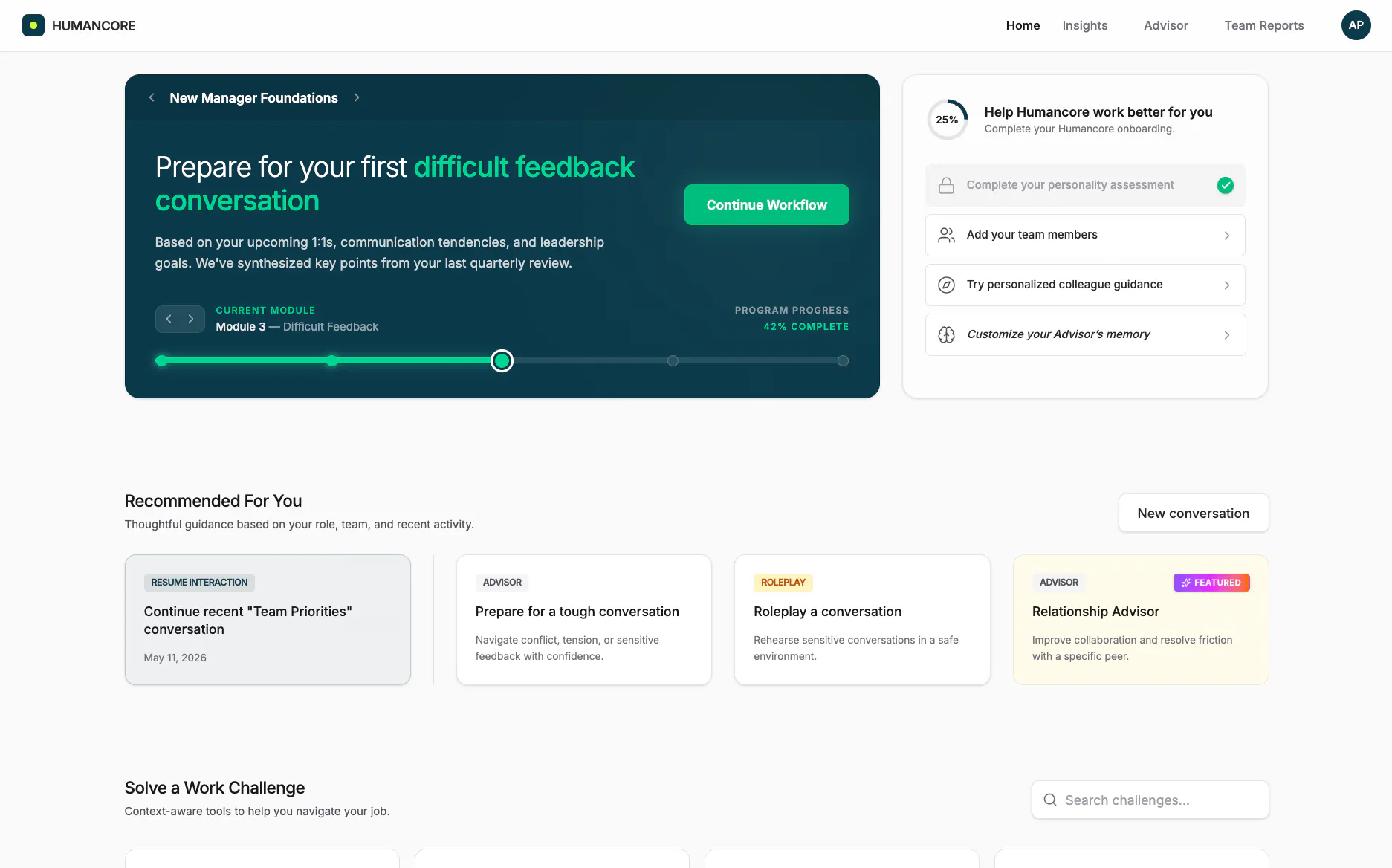
A participant sees what's next for them, and why.
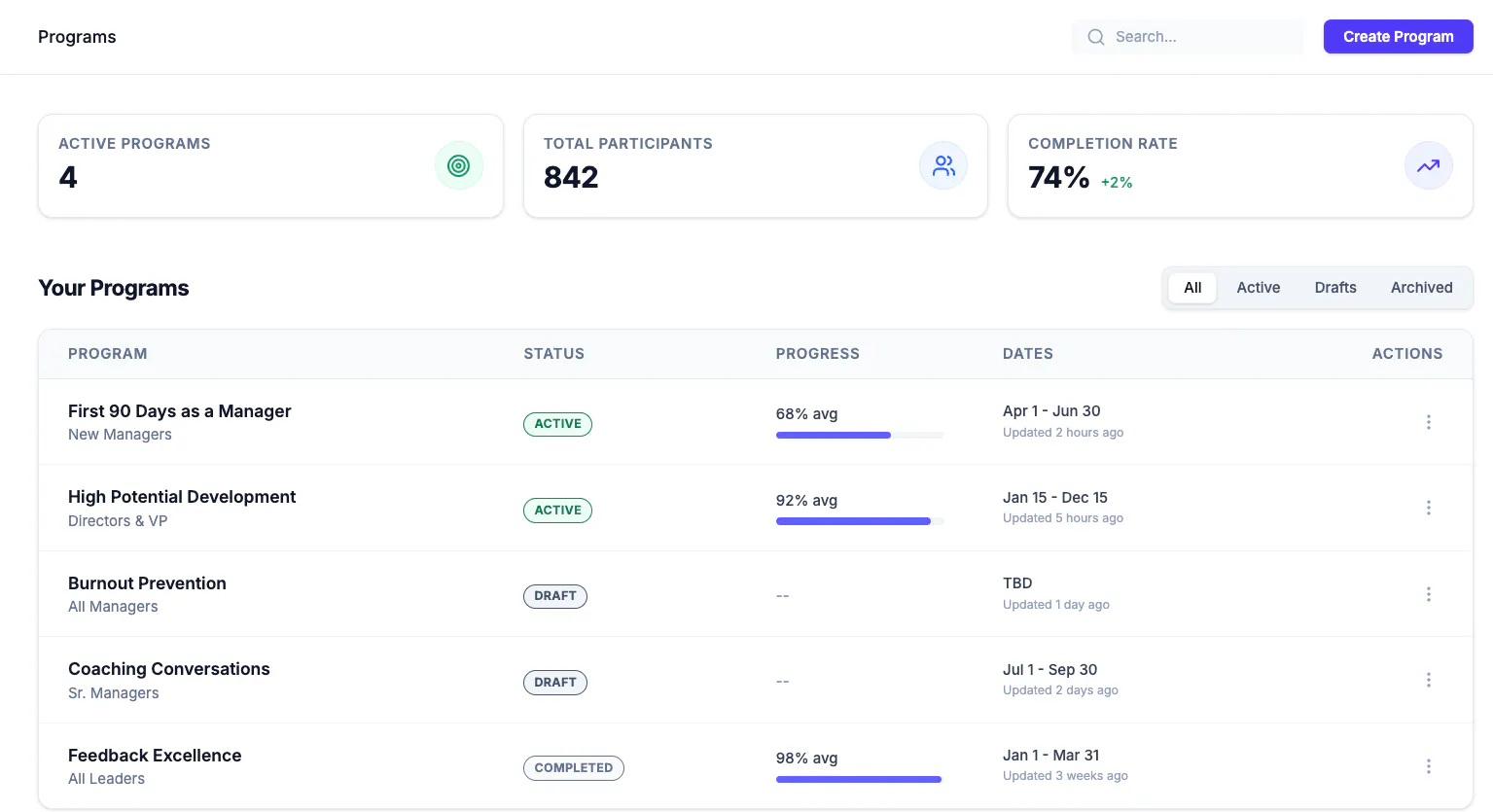
Administrators launch a program to a cohort and follow progress and enrollment across all programs in one place.
Although there are multiple applications, two uses have come up most often so far.
The first is extending programs that already exist. A cohort workshop delivers value in the (virtual) room, then competes with everything waiting at people's desks the following Tuesday. Programs and Initiatives engages cohorts during the weeks after, where follow-through usually gets cut for lack of hands.
The second is closing the last mile on change. Leaders announce a reorganization, a new operating model, an AI policy. Each person still has to work out what it means for their role and their team, and that translation is where a lot of change effort stalls out. Programs and Initiatives can embed that critical context into a series of interactions designed to encourage and facilitate progressive engagement in the change process.
If you're planning a manager cohort or a change rollout and want to see how this can help drive further success of those efforts, we'd love to show you. Request a demo.